If you run an acupuncture practice, you’ve likely noticed a massive shift over the last few years: patients actively expect their health insurance to cover acupuncture.
However, coverage isn't universal, and carrier policies vary wildly. Because Holbie processes the nation’s largest dataset of holistic health claims, we see real-world payment data long before industry reports catch up. We know which carriers pay smoothly, which ones impose hidden visit caps, and which conditions trigger automatic denials if coded incorrectly.
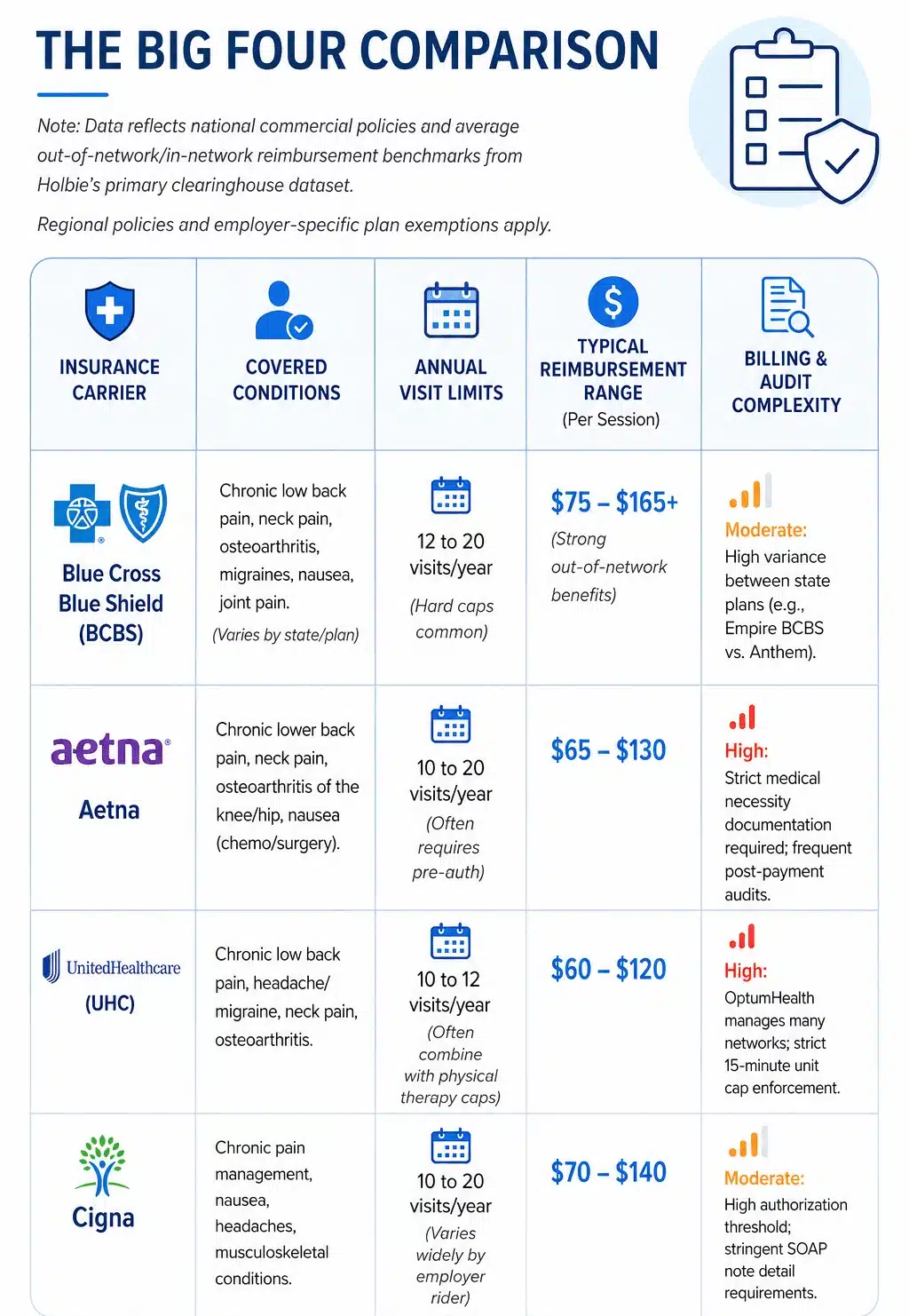
Below is our definitive, annual analysis of how the "Big Four" commercial carriers—Aetna, UnitedHealthcare (UHC), Blue Cross Blue Shield (BCBS), and Cigna—handle acupuncture claims, backed by live billing metrics.
You might also be interested in Does Insurance Cover Acupuncture?
Commercial Insurance Acupuncture Coverage: The Big Four Comparison
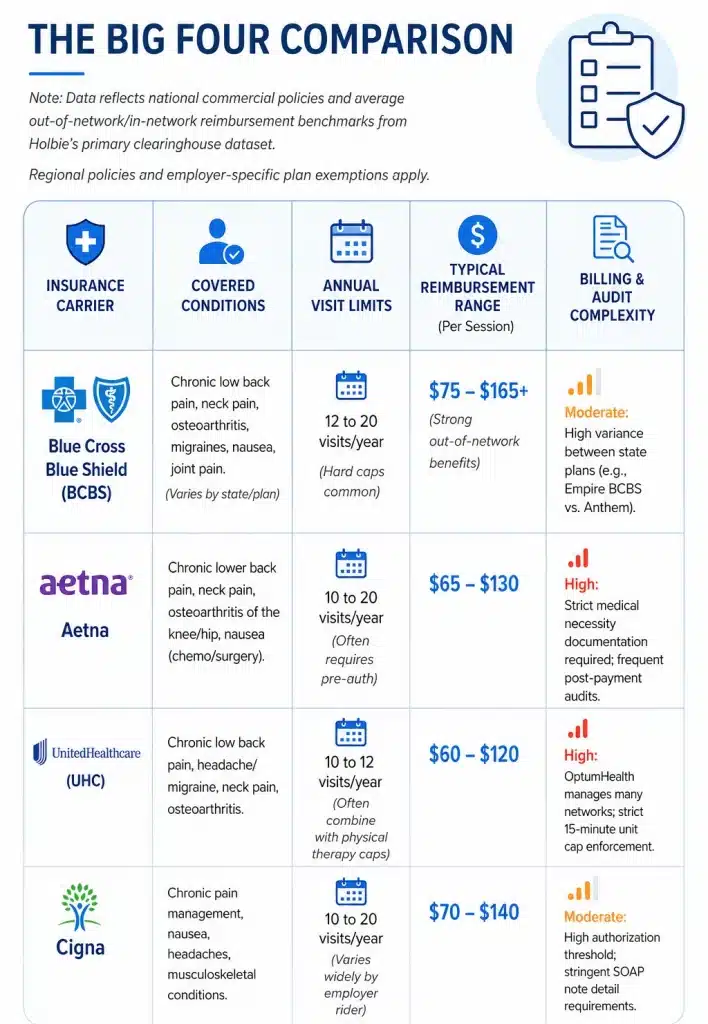
Note: Data reflects national commercial policies and average out-of-network/in-network reimbursement benchmarks from Holbie's primary clearinghouse dataset. Regional policies and employer-specific plan exemptions apply.
1. Blue Cross Blue Shield (BCBS): High Yield, High Variance
BCBS remains one of the most profitable carriers for acupuncture practices, particularly for out-of-network providers.
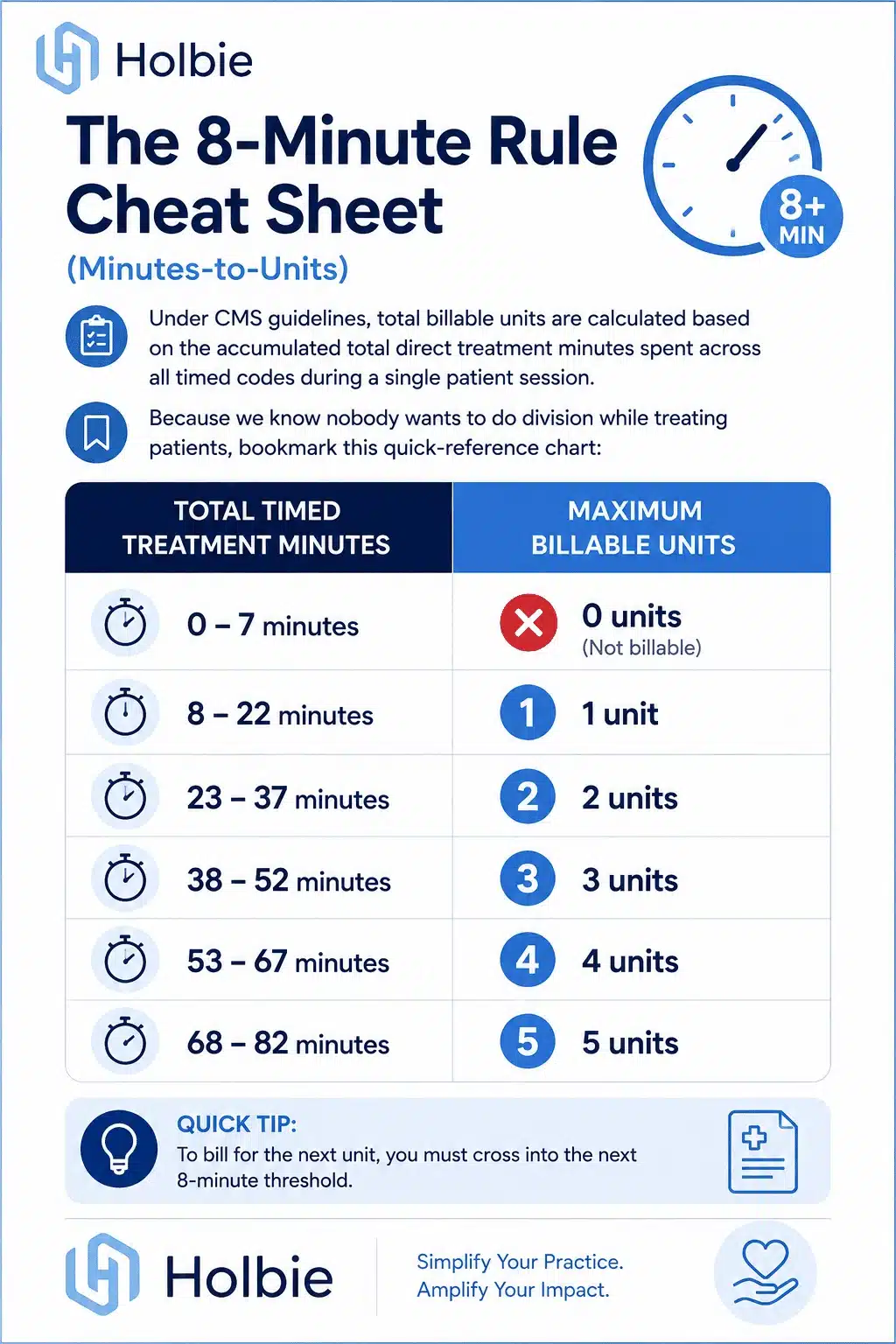
- The Good: BCBS plans generally have higher allowable amounts for CPT 97810 (initial 15 minutes of acupuncture) and CPT 97811 (additional 15-minute re-insertion units).
- The Trap: BCBS is broken up into independent regional companies. A patient with a federal BCBS plan will have entirely different authorization rules and fee schedules than a local state employee plan. Always verify whether the policy is managed locally or through the BlueCard program before treating.
2. Aetna: Strict Medical Necessity Rules
Aetna frequently covers acupuncture, but they are among the strictest when it comes to clinical documentation.
- The Good: Aetna covers chronic lower back and neck pain consistently across most standard commercial plans.
- The Trap: Aetna regularly subjects acupuncture claims to retrospective documentation audits. If your SOAP notes do not clearly record objective outcome measures (like Visual Analog Scale pain scores or Range of Motion improvements), they will demand repayment on past claims.
3. UnitedHealthcare (UHC): Watch Out for Optum Caps
UHC handles a massive volume of commercial lives, but billing them requires navigating their health management arm, OptumHealth.
- The Good: Patients with high-tier corporate employer plans (tech, finance, union) often have robust acupuncture riders with minimal copays.
- The Trap: UHC frequently bundles acupuncture visit caps into the same "bucket" as physical therapy, chiropractic, and occupational therapy. If a patient is seeing a physical therapist twice a week, they may exhaust their combined benefit pool before completing their acupuncture treatment plan.
4. Cigna: The Employer Rider Wildcard
Cigna's coverage is heavily dependent on whether the employer purchased an optional acupuncture rider for the group plan.
- The Good: When an employer opts in, Cigna’s claims processing is typically fast and reliable via electronic submission.
- The Trap: Cigna routinely denies claims where acupuncture is billed alongside passive modalities (like heat therapy or cupping) unless specific modifiers are appended correctly to demonstrate distinct procedural service.
3 Golden Rules for Acupuncture Billing Across All Payers
- Never Assume Coverage Based on the Card: Just because a patient's insurance card has a major logo (like Cigna or UHC) does not mean their specific plan includes an acupuncture rider. Proactive phone or electronic verification is mandatory before session #1.
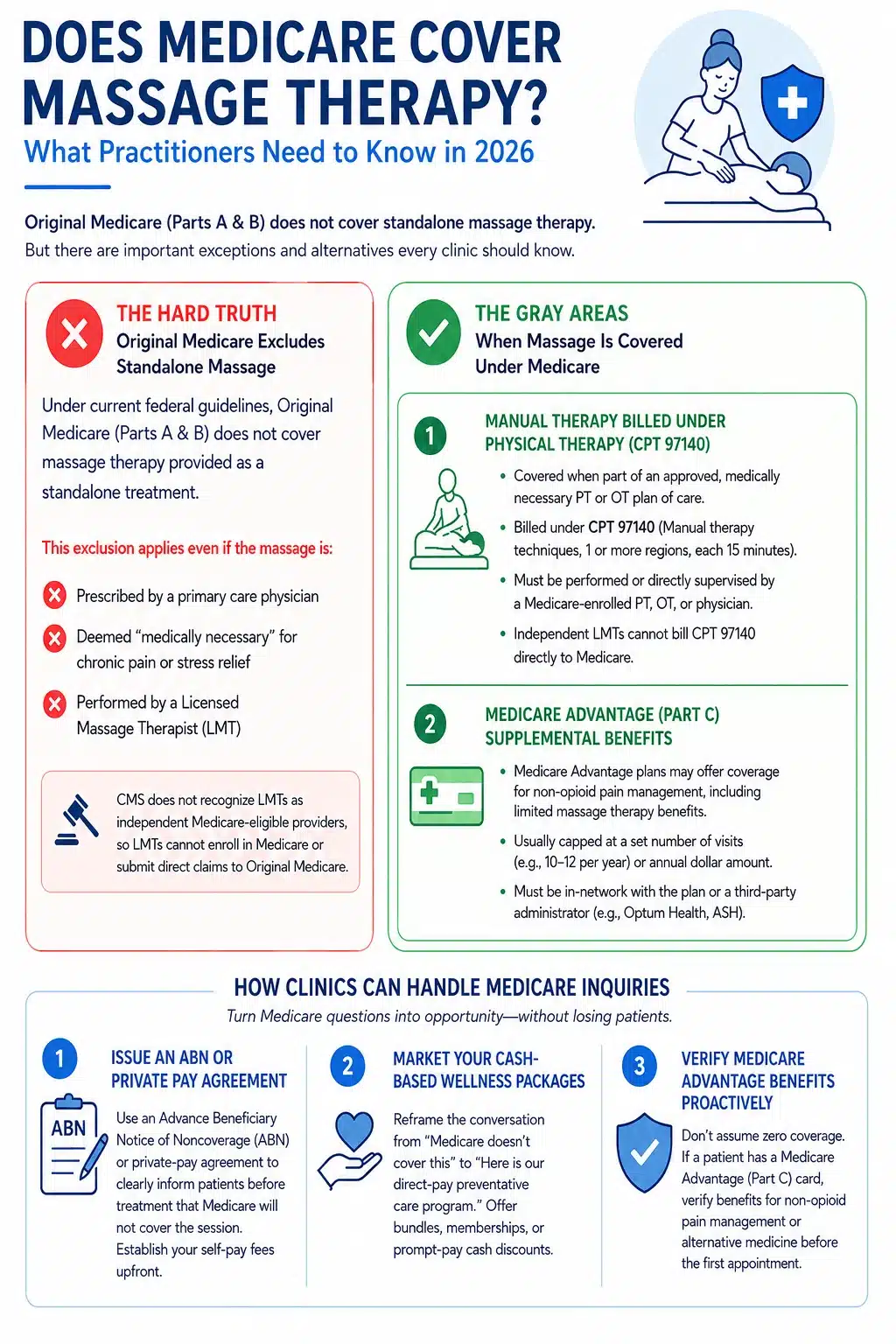
- Mind the Medicare Benchmark: Medicare only covers acupuncture for Chronic Low Back Pain (cLBP) under strict conditions (lasting 12+ weeks, non-specific, not associated with surgery/systemic disease). Many commercial carriers use Medicare's guidelines as a baseline for medical necessity.
- Protect Your Practice with Audit-Tested SOAP Notes: The number one reason claims are clawed back 6 to 12 months after payment is inadequate charting. Your SOAP notes must clearly document time spent, needle insertion points, and functional improvement goals.
Eliminate the Insurance Headache with Holbie
Navigating fee schedules, visit limits, and clearinghouse rejections shouldn't take time away from treating your patients.
As the nation's largest billing platform for holistic health, Holbie helps providers streamline insurance billing by verifying benefits before appointments and identifying potential coverage limitations when available.
Want to see how much hidden insurance revenue is sitting in your local area?