
This week, we are taking a quick, tactical detour from our usual high-level strategy.
We’ve already established the macroeconomic math of why accepting insurance is the smartest move you can make for your holistic practice. The numbers don't lie: an insurance patient's lifetime value is easily three to five times higher than a standard cash-pay patient.
So, why do so many acupuncture and massage therapists still resist it?
In my experience consulting with thousands of clinics, it usually comes down to a simple lack of confidence. Most providers have just never been shown the actual steps, or they get completely intimidated by the initial administrative hurdle. Whenever we meet students at schools or speak to practitioners at trade shows, the number one question we get is: "What do I actually need to have in place just to submit my very first insurance claim?"
Today, we are going to demystify the process. If you are a new provider, a student prepping for graduation, or a cash practice finally ready to level up, here is your step-by-step blueprint to getting your paperwork ready for the insurance billing grid.
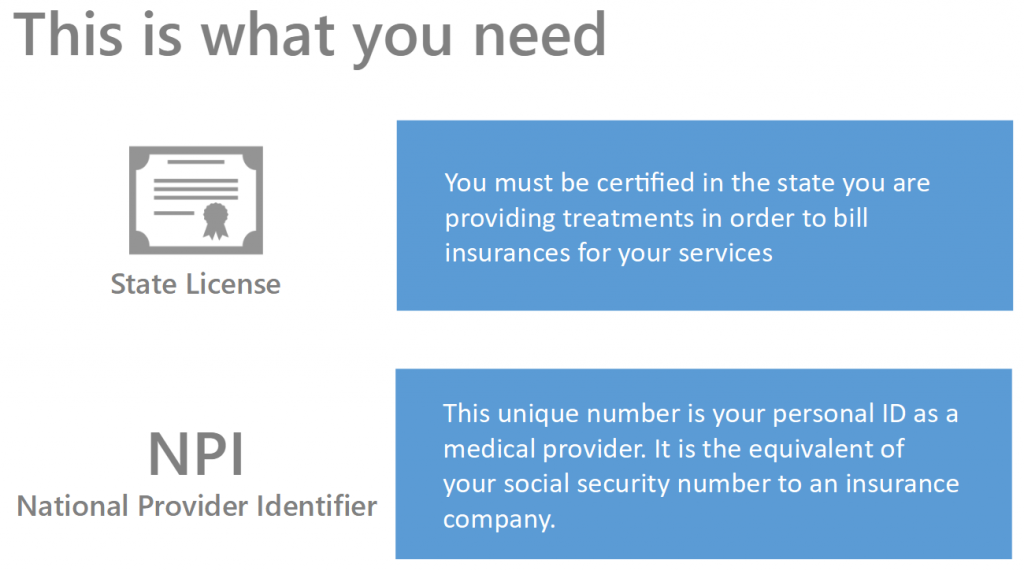
Step 1: Secure Your State License & Verify Your Taxonomy Code
It goes without saying that before you can bill a single dollar to a commercial insurance payer, you need an active state license to practice. But in the insurance universe, a license isn't enough—you have to map that license to a specific Taxonomy Code.
Think of a taxonomy code as a standardized federal classification system. It is a unique alphanumeric code that tells the government and private insurance systems exactly what your medical specialty is. If you don't use the correct code, the insurance computers will automatically kick your claims back as un-billable.
For the vast majority of you reading this, your primary specialty will map to one of these core taxonomy codes:
- Acupuncture: 171100000X
- Massage Therapy: 225700000X
- Chiropractic: 111N00000X
- Behavioral Health (Social Worker): 104100000X
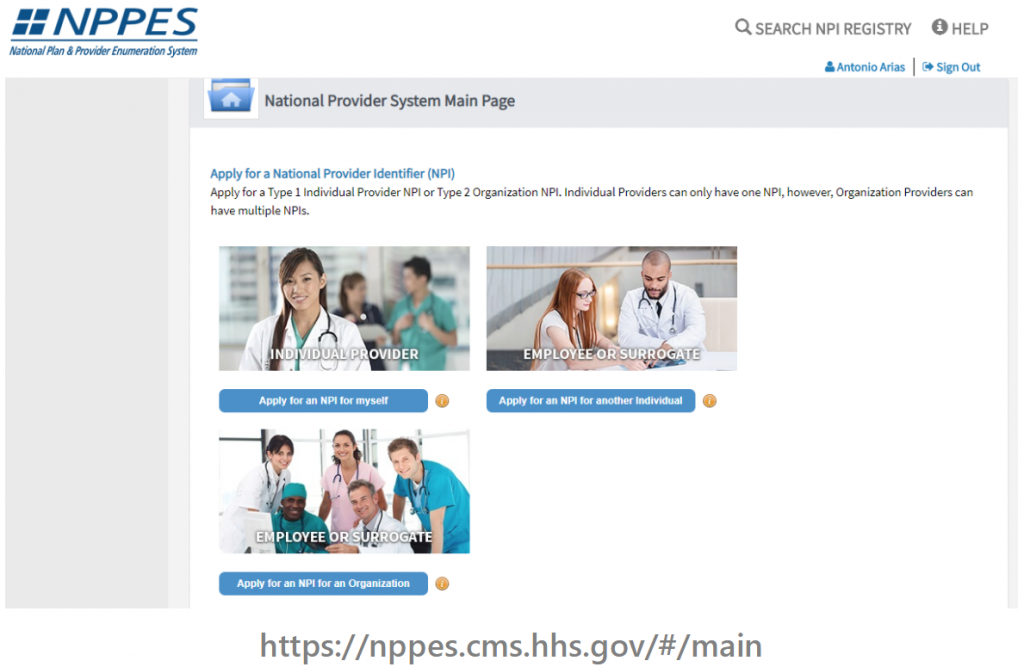
Step 2: Understand the NPI System (Your Medical Social Security Number)
The absolute bedrock of all medical billing in the United States is the NPI (National Provider Identifier).
Managed by the federal government via the NPPES website, your NPI is a unique 10-digit identification number assigned to you for life. Think of it exactly like a professional Social Security number. Every single insurance transaction you ever make—whether you are dealing with Medicare or a private payer like Cigna—will require this number to identify who actually performed the service.
However, as a business consultant, here is where most new providers make a critical, long-term mistake: they only apply for one NPI. To build a scalable business, you need to understand the difference between Type 1 and Type 2 NPI numbers.
Type 1: Your Individual NPI
This represents you, the individual human being and clinician. Every provider in your practice must have their own unique Type 1 NPI. When applying, make sure to list every single degree, certification, and qualifying taxonomy code you hold. This prevents cross-specialty rejections down the line.
Type 2: Your Group NPI (The Business Umbrella)
For liability, asset protection, and tax optimization, we highly recommend that you operate your practice under a legal business entity (like an LLC or S-Corp) rather than a sole proprietorship. If you do this, your business entity needs its own separate Type 2 Group NPI.
The Group NPI acts as a financial umbrella. Once established, you go into the federal NPPES system and legally link your Individual NPI to your Group NPI. When you bill insurance, your Group NPI becomes your official "Billing Provider," while your Individual NPI is listed as the "Rendering Provider."
⚠️ The Multi-Specialty Insider Secret
If you take only one piece of advice from this entire article, let it be this: When you register your Group NPI, register it under a "Multi-Specialty" taxonomy classification.
Why? Because if you register your Group NPI strictly under "Acupuncture," or “massage therapy” you are putting a hard ceiling on your business growth. If your practice expands next year and you want to hire a massage therapist or a behavioral health specialist under your brand, certain major insurance companies will automatically reject your new staff's claims. Their computer algorithms will flag that the rendering provider's specialty (Massage) does not match the practice's registered group specialty (Acupuncture).
Setting your corporate umbrella up as a multi-specialty group from Day 1 completely eliminates this bottleneck, allowing you to scale an integrative, multi-disciplinary clinic whenever you're ready.
Pro-Tip for Students and New Grads
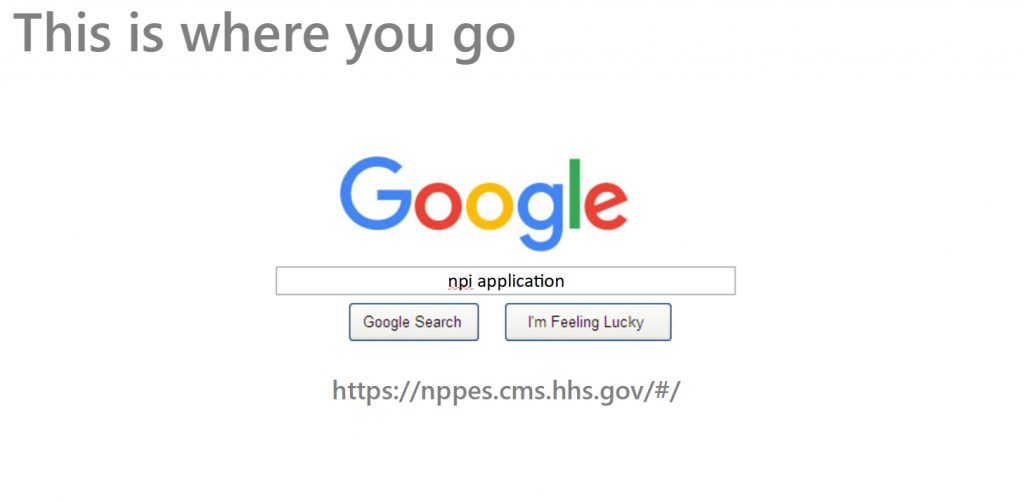
If you are a student reading this right now, do not wait until you graduate to start this paperwork. You can actually apply for and secure your Individual NPI number before you even receive your official state medical certificate. If insurance is in your future business plans, go to the NPPES registry and take care of this immediately so you can hit the ground running the second your license clears.
Conclusion: Don't Let the Admin Stop Your Growth
Getting your licenses, taxonomy codes, and dual-NPI numbers aligned is the mandatory first milestone of building a highly profitable, insurance-friendly practice. It sets the concrete foundation for your entire business.
Once your numbers are generated and linked, the next step is determining whether you want to go through the lengthy credentialing process or opt for faster enrollment.
If this still sounds like an alphabet soup of government acronyms and you'd rather have a team of experts handle the entire structural setup for you, let’s talk. At Holbie, we specialize in taking the administrative friction entirely out of acupuncture and massage billing so you can focus on what you actually went to school for: treating patients.